
A Compassionate Vegan Thanksgiving

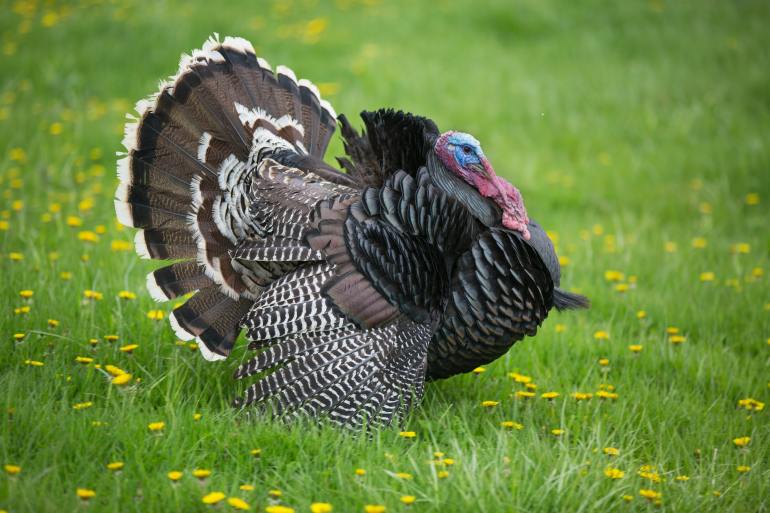
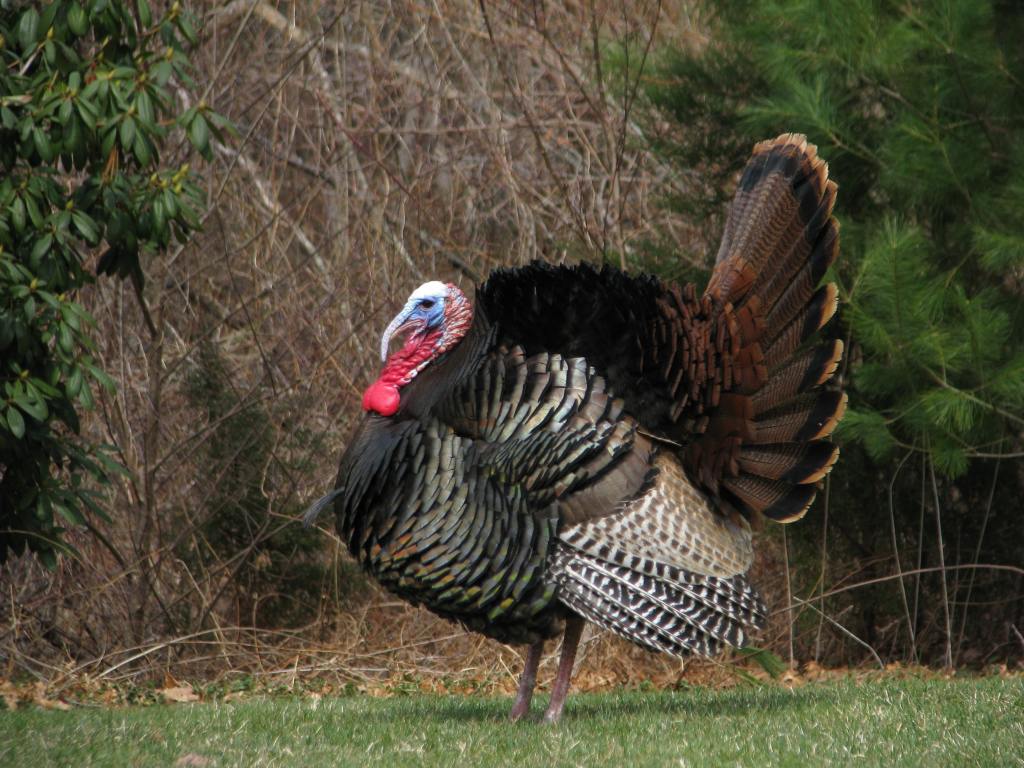
Turkey on grassy field
Photo by Suzy Brooks on Unsplash

What does Thanksgiving Day mean to you? Is it about time with family, expressing gratitude, or enjoying certain foods and traditions? How has the meaning of Thanksgiving changed for you over the years?

During my growing up years – perhaps you can relate – Thanksgiving was primarily a feast shared with loved ones, in which a turkey was the central part of the meal. When I became vegetarian several years ago (and vegan in 2019), it changed how I viewed Thanksgiving and what this holiday means to me.  I came to see the sentience and beauty of turkeys and other “farmed” animals – and feel incredibly sad about the suffering and lives of animals lost for this one meal. I have also come to appreciate the many delicious, plant-based, cruelty-free foods that I now enjoy.  

I still look forward to a shared meal with loved ones.  But now my scrumptious dishes are made from the plant kingdom.  And I try to view this day as a celebration of values such as compassion, appreciation, and gratitude. I invite you to explore – and perhaps rethink – what this day means to you.

Here are some ideas for enjoying a compassionate Thanksgiving:

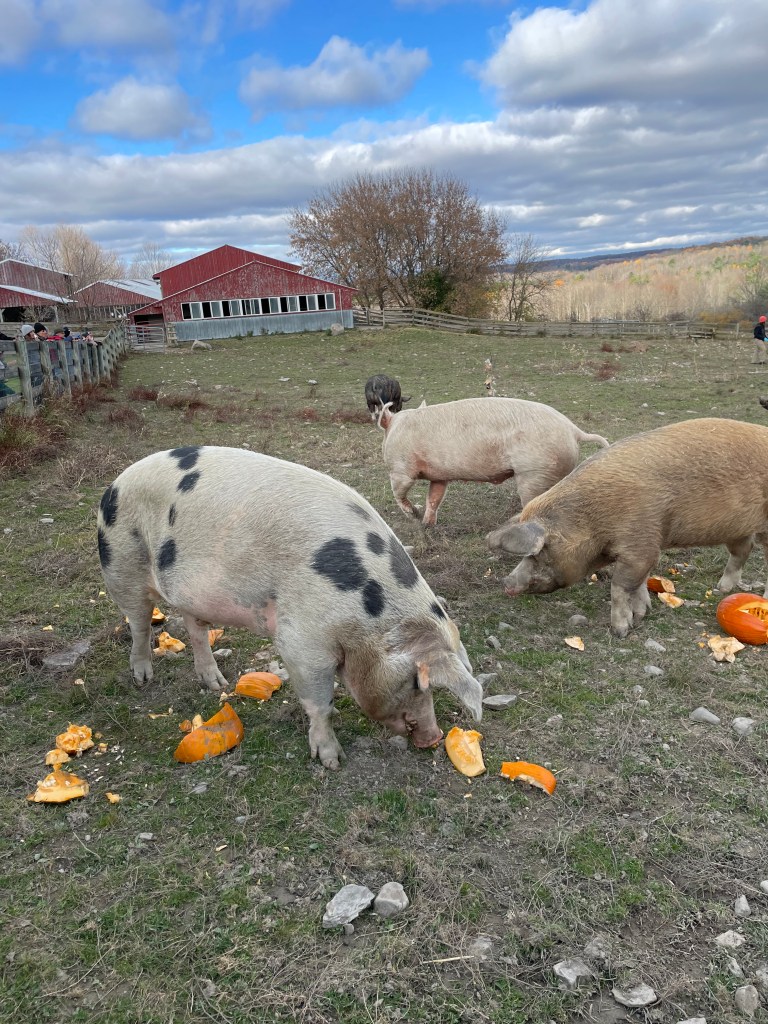
Photo by Angela Crawford – Farm Sanctuary

Rather than eating a turkey, “adopt” oneFarm Sanctuary (which has shelters in New York State and California) offers the option of symbolically adopting a rescued turkey by making a small donation. The funds provide food and care for turkeys living at the shelter.  Farm Sanctuary sends a certificate that includes a picture and the story of your adopted turkey. 

Visit an animal sanctuary. Some sanctuaries offer special events near Thanksgiving, such as Farm Sanctuary’s annual Celebration for the Turkeys. At this wonderful event, visitors enjoy quality time with the animal residents, along with staff, speakers, and other visitors who are committed to creating a just, compassionate, and sustainable food system. Last year I attended the Celebration at the Farm Sanctuary near Watkins Glen, NY. We watched the pigs enjoy a feast of pumpkins and the human visitors enjoyed a delicious plant-based holiday dinner. When I spend time with the animals at the sanctuary, I realize they have all the same qualities that we love in our companion cats and dogs – playfulness, the desire for affection, complex relationships, the desire to avoid pain, and their own unique personalities.

“People don’t consider farm animals loving and affectionate creatures, but once you raise them and see what they’re like – which is just like us – you get it.” – Donna Gervasi, co-owner of Grayrock Farm Sanctuary in Clinton, New Jersey (Press & Sun-Bulletin, 11/18/2024)

Enjoy an abundant feast from the plant kingdom.  Try out vegan versions of your traditional favorites.  This year, rather than cooking, my husband and I decided to order the Thanksgiving meal offered by our local vegan restaurant, Parlor City Vegan. In past years, we created delicious dishes such as roasted garlic mashed potatoes; mushroom gravy; sweet potato biscuits; roasted squash; cornbread stuffing; cranberry-orange relish; maple-glazed Brussels sprouts; and chocolate pecan pie. (I’m pretty sure we will be making that chocolate pecan pie again this year.)

Discover new recipes. If you aren’t sure where to get started with creating your own vegan feast, check out these wonderful resources for holiday recipes:

Consider a meat alternative.  Create a home-cooked main dish for the centerpiece, such as baked tofu, stuffed butternut squash, cauliflower “steak,” veggie pot pie, or shepherds pie. Or, if you would like a ready-made alternative that just needs to be heated in the oven, Gardein, Tofurky, and Field Roast offer plant-based holiday roasts you can enjoy. Sometimes I skip the “centerpiece” and just enjoy all the yummy vegan side dishes.

Connect with your reasons for eating plant-based.  Some of us go plant-based for health, others for ethical or environmental reasons. Being connected with your “WHY” can help you overcome any challenges on your veg journey. I became vegan for ethical reasons, and quickly learned about the health and environmental impacts of my food choices, which further strengthened my commitment. Ultimately, however, it is compassion for sentient beings that keeps me devoted to plant-based living. More than 46 million turkeys are bred and killed each year in the US for Thanksgiving alone. Commercially raised turkeys are bred to be much heavier than wild turkeys (so heavy they can barely walk or move). They live in confined, miserable conditions, and are slaughtered at only 12 to 19 weeks old.  Taking in these realities (and discovering that I could thrive with delicious, healthy plant-based foods) made me realize that I no longer wanted or needed to participate in this. 

Consider what Thanksgiving means to you.  Take time to explore your deeper meaning for the Thanksgiving holiday.  Many of us follow old traditions out of habit, rather than making a conscious decision about how we want to enjoy our holidays – or assessing which traditions still fit for us.  Although many refer to Thanksgiving as “turkey day,” is eating turkey really what this day is about? This year may be a perfect year to reevaluate your holidays, what they mean to you, and how you want to celebrate them.  Maybe you will want to keep some old traditions, modify others, and create new ones. Maybe you will want to honor compassion as a central theme in how you celebrate.

Take care of yourself emotionally. For many vegans and veg-seekers, holidays and social events that center around animal-based foods can be difficult. You may feel like you don’t fit in, now that you eat differently than the majority of people around you. And you may feel sadness, despair, or anger about animal suffering. Decide the best way for you to navigate holiday gatherings, whether that means bringing lots of great vegan food you can share, getting together for a vegan “friendsgiving,” or spending time with loved ones that is not centered around food. Check out my Vegan Communication Resource Guide for books, videos, and articles to help you with coping and communication strategies.

Practice gratitude.  Thanksgiving is a time to appreciate all the blessings in your life, and to share that appreciation with others.  Even in the midst of what is a challenging time for so many, we have reasons for gratitude. There are many health and psychological benefits of making a daily practice of acknowledging our blessings.

Make kind and compassionate purchases.  One way of appreciating our blessings is to pass them on to others.  In addition to donating time or money to causes that we care about, we can extend compassion to sentient beings and to workers by researching fair trade, cruelty-free, sustainable, and health-promoting choices for our food and gift purchases.  (Check out PETA and EWG for compassionate and sustainable buying options.) In addition, we can consciously shop at local or small businesses when possible. Our decision to extend compassion to others is a win-win situation, because ultimately it brings more health, fulfillment, and joy back to us.

Choosing compassion is not only kinder toward others, it is also strengthens our own well-being. We are wired for compassion – and when we expand our circle of compassion to include ourselves AND all sentient beings, it has the potential to heal our world.

WISHING YOU AND YOUR LOVED ONES A HEALTHY, JOYFUL, AND COMPASSIONATE THANKSGIVING!

Author holding book

Angela Crawford, Ph.D. is a psychologist, vegan educator, and plant-based culinary instructor. She is author of The Vegan Transformation: A Journey to Heal Yourself and the World (Lantern, 2025). The Vegan Transformation shares the healing benefits of a compassionate lifestyle and is available wherever you buy books.

Note:  This article was revised and updated from Vegan Thanksgiving 2024.

The Emotional and Spiritual Benefits of Going Vegan

Mountain view overlooking valley with blue sky and clouds. Photo taken from the top of Sandia Peak, New Mexico.

Mindfully choosing to eat plant-based, as an expression of care for animals, the environment, and our own health, creates a massive internal shift. As we eat more compassionately and leave animals off our plates, we may discover transformations in heart, mind, and spirit that we never expected. We encounter a sense of peace, fulfillment, and freedom that – for many of us – far outweighs any challenges of stepping into this way of living. 

As a psychologist and a vegan, I have been fascinated by the psychological changes experienced by those who take the vegan path. While there has been considerable research on the health benefits of a plant-based lifestyle, I found less exploration of how living vegan can impact us emotionally and psychologically. This led to research for my book, The Vegan Transformation: A Journey to Heal Yourself and the World (Lantern Publishing & Media, 2025), surveying and interviewing vegans about the emotional and spiritual impacts of their lifestyle. After collating the most common experiences, seven transformative pillars emerged.

These pillars are foundational aspects of a flourishing life. While there are no guarantees that being vegan will bring these qualities into your life, they capture an experience that is common for many vegans. This is the possibility of creating a meaningful and fulfilling life that also contributes to a kinder, healthier world. Below I describe the seven transformative pillars.

Values alignment

Tangibly honoring our values through our food choices and other purchases can be one of the most fulfilling and freeing aspects of being vegan. As we clarify our core values and make daily choices in accord with these values, we feel truer to ourselves and more at peace. We discover the courage to honor our conscience and course-correct when our actions are out of alignment. We dare to be different, guided by the ethics of kindness and nonviolence.

Cultivating compassion

In choosing veganism, we widen our circle of compassion. Rather than compartmentalizing our empathy to select groups, we become willing to witness and, whenever possible, alleviate the suffering of sentient beings. As we extend our compassion to all beings, we make choices that bring kindness, wholeness, and freedom for ourselves and others. We discover the courage and tenacity to go against the status quo – and take a stand that all sentient beings deserve a life that is free from unnecessary suffering.

Deeper meaning and purpose

Becoming vegan can fuel our sense of purpose, as we realize we have the power to create positive change and lessen suffering. Many of us are drawn to bring our unique gifts and skills to raise awareness about the impacts of our food choices. It doesn’t matter whether we serve on a smaller scale in our family or community, or on a larger, global scale. We each have a meaningful purpose to fulfill.

Authentic fulfillment

Many vegans discover authentic fulfillment, even as we awaken to realities that are quite distressing. This fulfillment doesn’t mean “feeling good” all the time, but rather, learning to navigate our full spectrum of emotions and finding peace in doing what we can. We nurture our holistic well-being when we eat whole plant foods and incorporate nourishing activities and lifestyle practices.

True connection

When we embrace a vegan lifestyle, we discover a like-hearted tribe of other vegans who share our convictions. We may make these connections through online networks, social media groups, or local meetups. These meaningful connections nourish and strengthen us. As we take this road less traveled, we also learn to peacefully navigate relationships with others not yet on this path.

Health empowerment

Many vegans discover the powerful healing benefits of a plant-based lifestyle for addressing degenerative diseases. This discovery brings something beyond physical healing; it brings empowerment, the realization that we have more control over our well-being than we ever knew. Even though we all face the inevitability of aging and death, and perhaps some ailments along the way, empowerment is about taking action where we can and living as vibrantly as possible.

Discovering our interconnectedness

Once we are no longer eating animals, new awareness can emerge. Many vegans report a deepening spirituality, increased awe of the natural world, and a greater sense of our interconnection with all of nature. We realize that we are connected in ways that we can’t quite define and that bring a sense of wonder, mystery, and magic to our lives. Gradually, we see that caring for each part of this intricate system serves our own well-being and the greatest good.

These seven pillars are supported by psychological research as keys to a life that is rich and meaningful. When we bring these pillars together with a vegan lifestyle, their synergistic power can be transformative. As we eat more compassionately and sustainably, we embrace a vision where all beings can flourish, and discover that making the kind choice also nourishes us.

This article was published on the Main Street Vegan blog on 4/22/25. The information shared is adapted from my book, The Vegan Transformation: A Journey to Heal Yourself and the World (Lantern, 2025).

For information on moving toward (and thriving with) a plant-powered, vegan lifestyle, check out my Resource List.

Angela Crawford, Ph.D. is a psychologist and author of The Vegan Transformation: A Journey to Heal Yourself and the World (Lantern Publishing & Media, 2025), which was launched on April 22, 2025, Earth Day. 

Dr. Crawford is certified as a MSVA Master Vegan Lifestyle Coach and Educator, licensed PCRM Food for Life instructor, and Transformational Coach. A speaker and teacher about the psychological benefits of veganism, she is passionate about the power of personal transformation to create a more fulfilling and purposeful life, and a kinder, healthier world.

people holding and cutting vegetables

Support on Your Vegan Path

Photo by Maarten van den Heuvel on Pexels.com

One of the most important – but often overlooked – aspects of thriving with a plant-powered, vegan lifestyle is having a strong support network. Research suggests that social challenges are among the most common reasons for straying from a plant-based lifestyle. Many find it hard to eat differently than those in their social circle, to be the “odd one out.” Having a social network with other vegans appears to strengthen our commitment and adherence. It also brings joy and fulfillment, as we connect with like-hearted others. Supportive social relationships have been hugely important on my journey, as well as for many of the vegans I interviewed for my recently released book, The Vegan Transformation: A Journey to Heal Yourself and the World (Lantern, 2025).

To experience the transformation that is possible with a vegan lifestyle, we can’t do it alone. We need others we can talk to, and share our hopes, dreams, and challenges. These supportive relationships inspire and uplift us. They give us hope and strengthen our commitment during challenging times. They empower and encourage us. In many cases, they collaborate toward a shared vision, whether to be more healthy, awaken spiritually, advocate for animals, or heal our planet.

Learning to build supportive connections with other vegans, as well as with non-vegan friends and family, is important for thriving with your plant-powered lifestyle. Below are five tips for building greater social fulfillment and connection: 

  1. Join vegan networks or groups. Whether online or in person, it’s important to create vegan friendships where you feel supported, nurtured, and inspired. This may include online meetings, plant-based conferences, local meet-ups, or volunteering for a vegan or animal rights organization.These networks provide a safe space to share feelings and receive support. It isn’t the size of network that is most important; even a few vegan friends can make a huge difference. You can find these networks through searching online, on social media, or connecting with a local plant-based Building Healthy Communities group.
  2. Be okay with being different. This is a big one—because eating plant-based is still a minority lifestyle, and for many of us, it isn’t easy to go against the status quo. We are biologically wired to want to fit in and avoid social rejection. Some people are more naturally rebellious and may not find this as difficult, but for many, it can be a major struggle. Thriving vegans discover how to shift their mindset around the idea of being “different.” It’s important to connect with a strong WHY for your choice to be vegan. What motivated you to choose a vegan lifestyle? Staying connected with these motivations strengthens you to hold your beliefs in the face of social pressures. This will empower you to speak up and honor your values with courage and integrity.
  3. Learn to speak up assertively and effectively. Thriving vegans develop the ability to express their feelings, needs, and perspectives in ways that create heart-felt dialogue. Unfortunately, many of us lack the ability to skillfully navigate differences, and this leads to unresolved conflicts and emotional cut-offs. Many of us fall into extremes of being too passive (people-pleasing and avoiding conflict) – or too aggressive (speaking out in angry or hostile ways), rather than being assertive (speaking up clearly, directly, and respectfully). Thriving vegans work to develop healthy communication skills. These skills empower you to set boundaries around which situations you are willing (or not willing) to be part of and explore new ways to connect with those you love, including replacing old traditions that center around animal foods. (See my Resource List for books and resources on improving communication).
  4. Create vegan allies. Even when your loved ones are not willing to go plant-based along with you, you can request their support for your journey. In her book Beyond Beliefs, Dr. Melanie Joy emphasizes the value of cultivating vegan “allies” who understand and support your vegan choice. These are people who, although not necessarily vegan themselves, do not undermine your choice to be vegan, and advocate for you when you need support. This is important because you are more likely to thrive on your journey when others are supportive and understand why a vegan lifestyle matters to you. Asking someone to be an ally lessens the likelihood they will try to sabotage your lifestyle – and invites them to be more receptive to learn about veganism, because they are not feeling personally pressured or judged.
  5. Planting seeds for positive change. Focus on being a positive role model who embodies the compassion and well-being you wish to inspire in others. Rather than staying stuck in frustration when others are not willing to change, realize that everyone has their own journey. Pressuring or criticizing others rarely works to create personal or social transformation. At the same time, you can plant seeds that will help others, never knowing when those seeds may take root. As you embody a healthy, fulfilling, plant-powered lifestyle, you never know who you may inspire, and what transformations may unfold.

Developing meaningful connections is one of the joys that can come with discovering your passion for vegan living, and sharing this with others. Our connections strengthen us, bring fulfillment, and inspire us to be better versions of ourselves. Strengthening our skills for healthy relating, navigating differences, and nurturing support helps to create a healthy and fulfilling life, and a thriving, joyful vegan lifestyle.

NOTE: Excerpt adapted from The Vegan Transformation: A Journey to Heal Yourself and the World by Angela Crawford, Ph.D. Parts of this article were also shared with Vedge Your Best podcast and newsletter. CLICK HERE to listen to my interview on Vedge Your Best podcast.

Angela Crawford, Ph.D. is a psychologist, vegan educator, transformational coach, and Food for Life instructor. She is author of The Vegan Transformation: A Journey to Heal Yourself and the World (Lantern, April 2025). She also hosts a YouTube channel, @The Vegan Transformation.

Hands forming heart shape with sunset in the background

Plant-Empowered Lifestyle for Heart Health

Hands forming heart shape with sunset in the background
mayur-gala-2podhmrvlik-unsplash

Chronic illness takes a huge toll. I have witnessed its impact on the lives of many of my clients, my parents, and numerous friends and family. For those afflicted with a chronic medical condition, it often takes a toll on their very quality of life—impacting everything from daily activities, to work, to relationships, to finances, to independence and autonomy.

Chronic medical conditions also create a huge societal toll. In the US, we are facing a large-scale health crisis. It affects our country’s economic well-being, as we spend huge amounts on medical care. In fact, the US spends more per capita on health care than any other nation, double that of other industrialized nations. Despite our higher health care spending, Americans have lower life expectancy than other high-income nations.

Cardiovascular disease, in particular, has become epidemic in the US. Over 75 percent of people between ages sixty to seventy-nine, and 90 percent of those over age eighty, are afflicted with some form of cardiovascular disease, according to the American Heart Association (see article by AARP). And research suggests that heart disease often starts when we are young, long before we see any signs of its progression.

Early in my career as a psychologist, I learned about the power of mindset, stress management, exercise, and other lifestyle factors for influencing health, but I had little understanding of the role of nutrition. When I first learned about research by pioneers such as Drs. Neal Barnard, T. Colin Campbell, Dean Ornish, and Caldwell Esselstyn, showing the healing power of a plant-based diet to prevent and reverse many common lifestyle diseases, I was blown away. (See my Plant-Powered Resource page for a list of books and resources that share this research).

Since I have a strong family history of heart disease, I was especially impacted by learning that Drs. Ornish and Esselstyn have shown that even severe coronary heart disease can be reversed (and prevented) through a low fat, plant-based diet. Learning that we aren’t solely at the mercy of genes, circumstances, or the medical system, and that we can take charge of our own health, was eye-opening and empowering.

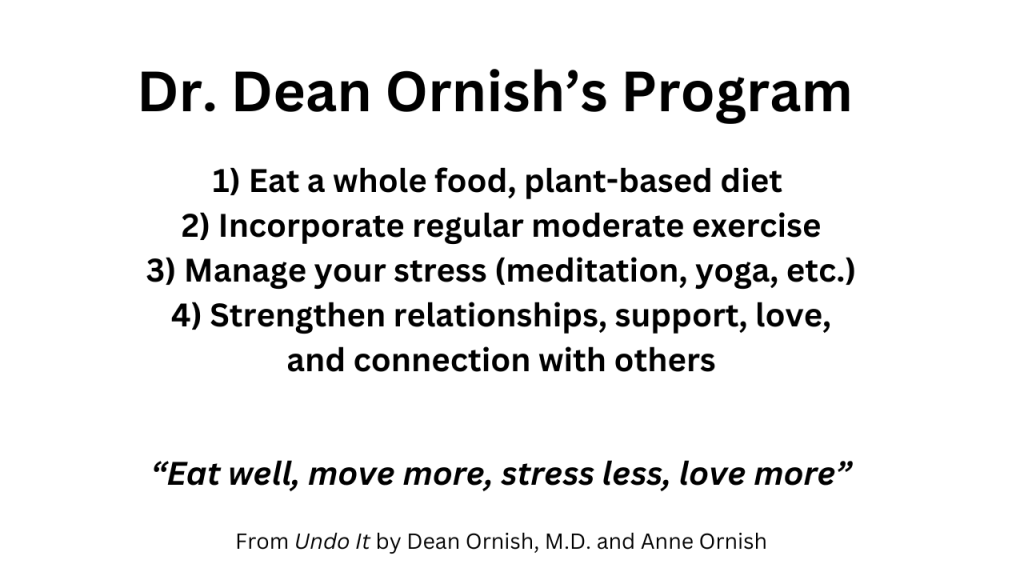
Dr. Dean Ornish has conducted revolutionary research, since the 1980’s, showing that a healthy lifestyle, centered around a plant-based diet, stress management, exercise, and social support, can reverse coronary artery disease, even among those with advanced cases. In addition to improvements in his patients’ physical symptoms, functioning, and well-being, scans of their blood vessels showed reduced blockage and improved blood flow. (For more about Dr. Ornish’s programs and research, read his book, UnDo It, or check out his website).

Similarly, Dr. Caldwell Esselstyn, Jr. conducted research examining the effects of a whole food, plant-based diet for patients with severe coronary artery disease. He found that patients who followed a low fat, plant-based diet showed significant reductions in total cholesterol, LDL cholesterol, coronary events and symptoms, and also evidenced reductions in blockages in their arteries. These improvements enabled his patients to return to previously enjoyed activities and regain their quality of life. (See Prevent and Reverse Heart Disease by Dr. Esselstyn to learn more.)

After my father went through cardiac bypass surgery, I sent him a copy of Dr. Dean Ornish’s cookbook. I don’t think he ever tried the recipes, or significantly changed his diet, although he seemed to appreciate my intentions. (And unfortunately, I lived too far away to share healthy plant-based meals with him on a regular basis). His cardiovascular disease progressed, leading to additional procedures and surgeries. It was heartbreaking to see the impact of these health issues on his life, activities, and independence. My grief was compounded by both parents passing at a younger age than I anticipated due to lifestyle related diseases. Even though I was an adult when I lost them, I felt very much like an orphan after their deaths.

I believe that the loss of my parents played a role in my own desire to be as proactive as possible with my own health, so that I can remain independent, vibrant, and healthy for as long as possible. I have come to realize that we have significantly more personal power over our health than many of us have been told. Rather than clogging our arteries with the Standard American Diet (SAD diet), we can make healthy dietary choices that improve our well-being and decrease our risk for degenerative, lifestyle diseases.

One of the stories I share in my forthcoming book (The Vegan Transformation: A Journey to Heal Yourself and the World) is that of Dr. Akil Taher, a physician, author, and motivational speaker. Dr. Taher began experiencing chest pain in his fifties. Medical testing revealed severe coronary artery blockages, which were addressed by placing stents. Six years later, when the arteries had become narrowed again, he underwent cardiac bypass surgery at age 61. This pivotal experience ultimately led him to adopt a whole-food, plant-based diet. Dr. Taher’s book, Open Heart, chronicles his journey from “couch potato” to running marathons and mountain climbing. His example highlights the profound impact of plant-based diet, mental and emotional resilience, spiritual growth, and finding life’s purpose. He now educates people on preventing and addressing the causes of chronic diseases, rather than treating the consequences of disease after it has happened. (See Dr. Taher’s website to learn more).

It’s empowering to realize that we have more personal power over our health than we have been taught. While we can’t necessarily avoid all illness, we can become informed and make lifestyle choices that support our health. Since learning these connections, it has been part of my mission to empower myself and others toward better physical, emotional, and spiritual health, through the power of a plant-powered, vegan lifestyle.

This passion is one of the reasons I became a licensed PCRM Food for Life instructor and now offer classes on plant-based cooking and nutrition for my online and local communities. Food for Life (FFL) classes promote healthful eating based on the latest scientific research, to help participants reduce their risk for diet-related diseases such as heart disease, diabetes, and cancer. FFL is offered through Physicians Committee for Responsible Medicine (PCRM), a national nonprofit organization that promotes preventive medicine, particularly good nutrition.

Many of us have never learned the power of plant-based nutrition and other healthy lifestyle changes to improve our health and well-being. Once we learn the WHY and the HOW of a healthy, plant-based lifestyle, it can transform our health and our life.

Our health and well-being are among our greatest resources. When we include ourselves in our circle of care, this in turn can empower us to extend our compassion and care to others. Whatever our reasons for moving toward a plant-based lifestyle (whether for personal well-being, animal compassion, and/or the health of our planet), the healthier we are, the greater impact we can have on ALL the things that matter most to us.

NOTE: Segments of this article are adapted from The Vegan Transformation: A Journey to Heal Yourself and the World.

Disclaimer: The information provided in this article and on my website are not intended to be a substitute for professional medical advice, diagnosis, or treatment. Always seek the advice of a qualified health professional with any questions you may have regarding a medical condition. In addition, if you are taking medications for a health condition, it is important to discuss any dietary changes with your physician, as changes in diet may impact the amount of medication needed.

Angela Crawford, Ph.D. is a psychologist, vegan educator, transformational coach, and plant-based culinary instructor. She is author of The Vegan Transformation: A Journey to Heal Yourself and the World (Lantern, April 2025). She also hosts a YouTube channel, @The Vegan Transformation.

Mountains with sun shining behind them.

Discovering the Vegan Transformation

Photo by Sagui Andrea on Pexels.com

Have you ever felt pulled to make some kind of life change, maybe even a change that surprised you? Maybe it was an inner knowing that it was time to start down a new career path, end a relationship, or finally take charge of your health. You may have felt an inner call, a sense that you needed to take action, even though you weren’t sure exactly how it would all work out. Or perhaps circumstances lined up so that you saw no other choice but to launch onto a new, unknown, and uncertain path. This call from the deepest parts of us often gives us the opportunity to become a truer version of ourselves. It can lead us down pathways that initially we are somewhat hesitant to take, but ultimately seem very right, even exhilarating.

—Angela L. Crawford, Ph.D. (From The Vegan Transformation: A Journey to Heal Yourself and the World, 2025)

I’ve experienced an inner calling, drawing me to unforeseen paths, many times in my life. This led me to change majors from journalism to psychology midway through my junior year in college. It sent me to many unexpected places throughout my educational and career journey. This inner voice also guided me to uplevel my self-esteem, relationships, spirituality, financial choices, and many other areas of my life. However, perhaps one of the most surprisingly transformative experiences in my life was becoming vegan.

Like many of us, I’ve loved animals since a young age, and never wanted to harm them. However, my Midwestern upbringing taught me that meat and dairy were absolute necessities. I believed that I couldn’t survive, and certainly couldn’t thrive, without eating them. I had meat at most of my meals; I thought something was missing if it wasn’t there. I thought I needed it for energy, to have enough protein, and to balance out my sugar highs. I had met only a few vegetarians or vegans, and I couldn’t imagine what they ate, or how a meatless diet could possibly sustain them.

On top of that, life felt too overwhelming to take on any major dietary changes, anything that would require extra energy beyond eating what was tasty, familiar, and convenient. Although I’ve always valued a healthy lifestyle, for the first few decades of my life, I was not a healthy eater. I ate a lot of comfort foods, microwave meals, sweets, and salty snacks. I rarely came anywhere near the recommended five to nine daily servings of fruits and veggies. I couldn’t imagine taking on the effort of regular cooking and meal planning.

What opened my eyes and led me to eating more plants was when I learned how animal agriculture works. In December 2006, I happened to see a news program about workers in a meat processing plant. These workers, most of whom were immigrants, endured frequent occupational injuries due to the dangerous and repetitive nature of their work. They were coerced to not report their injuries but rather to continue working or face the threat of losing their jobs and income. The program didn’t show any gory details of “meat processing” – but something about this story really impacted me.

As I felt empathy for the workers, it struck me that if I didn’t like how they were treated, I would be appalled if I saw the actual slaughter process or what happened to the animals. For the first time in my life, I began to consider the systems that produced my food, and the injustices in these systems. At that time, I didn’t know about factory farming. I only saw the cows grazing in the fields; I didn’t know about the large-scale factory farms that raised, bred, and slaughtered billions of animals, since these were kept well out of sight.

The very next day after watching that program, I bought my first veg cookbook and tried out a recipe for roasted red pepper, spinach, and artichoke lasagna. Because I was such a novice at cooking, I had to drive to a shopping center midway through the recipe to purchase appropriate pots and pans. The lasagna turned out to be delicious, full of vibrant colors and sumptuous flavors. I shared it with my boyfriend (now husband) and his family, and it got rave reviews. Wow, who knew I could cook?

For the first time in my life, I found that I enjoyed cooking. I realized that I had never liked handling meat, and always worried about it being cooked enough to avoid illnesses like salmonella. Now I began exploring new plant-based recipes, going to the health food store, and buying spices and condiments I had never used before. Cooking ceased to be a chore, and instead became an enjoyable and meaning-filled adventure.

I went on to read every book I could find about vegetarianism. I read about plant-based nutrition, to make sure I was covering all my nutritional bases. I read about the ethical and environmental impacts of industrialized animal agriculture. I found myself captivated, and horrified, by what I was learning. Once I truly connected with the painful realities of how farmed animals are raised, the oppressive conditions they live in, and the suffering inherent in the slaughter process, I could no longer consume meat.

I quickly came to understand that despite what my upbringing and culture had taught me, I did not need animal flesh to thrive physically. In fact, as I discovered from impactful books like The China Study (T. Colin Campbell, Ph.D.), How Not to Die (Michael Greger, M.D.), and Undo It (Dean Ornish, M.D.), vast research shows that a plant-based lifestyle can prevent and reverse heart disease, Type 2 diabetes, autoimmune disease, and some forms of cancer. This really hit home for me, as I have a strong family history of heart disease. I discovered that my choice to stop eating meat was not only kinder to animals, it was also better for my own health.

Several years later, I decided to become vegan and eliminated dairy and eggs. I found that after releasing dairy from my life, my seasonal allergies – that I thought I would always have – just went away. Some skin conditions that I struggled with went away too. I discovered vibrant health and energy.

When I stopped eating animals and embraced the bounty of the plant kingdom, I experienced positive inner changes I hadn’t anticipated. Even though there were challenges along the way, once I committed, I felt a great inner peace. I felt exhilarated and awakened by this choice. I was free to be more authentically me. As I lived more aligned with my compassionate nature, I felt a weight lifted that I hadn’t realized I was there. Through having the courage to defy social norms around what I ate and purchased, I discovered the peace that came with aligning my behaviors with my spiritual and ethical values.

As I shared in one of my early blog articles, veganism helped me find my voice. As someone who identifies as an introvert, I lived a private and quiet life. Prior to becoming vegan, I didn’t have a website or social media, and I didn’t enjoy public speaking. I kept a low public profile. Becoming vegan has changed that. Within six months after I committed to a fully vegan lifestyle, I attended Main Street Vegan Academy in New York City and became a Certified Vegan Lifestyle Coach and Educator. Through this life-changing class, I learned more about all the reasons that being vegan aligns so well with my values. The more I learned, the more I became committed to sharing this transformative way of living with others.

Within a year I started a blog focused on psychology and veganism, writing on topics such as navigating social challenges as a vegan, thriving emotionally, and the benefits of veganism for mind, body, and spirit. I found myself engaged in public speaking, something I couldn’t have imagined previously. I took plant-based nutrition courses, and now teach others about plant-based cooking and nutrition. I met vegans from all over the world through various on-line groups. In honoring my core values and daring to speak about these values, I found a like-hearted tribe, along with greater confidence, peace, and fulfillment.

Along my journey, I’ve come to realize that becoming vegan is about much more than my own ethics and personal health, even though these are important. Even more so, it is about standing for a world of compassion, kindness, health, and sustainability. I now see how so many things I care about are interconnected, and that the daily choice of what we eat has the power to impact the well-being of animals, humans, and the very planet on which we reside.

While there are challenges in adopting any lifestyle change, and particularly being vegan in a not-yet-vegan world, I found that following this path has brought unexpected abundance, fulfillment, passion, and authenticity. I went on to research and write a book, The Vegan Transformation: A Journey to Heal Yourself and the World, due to be published in April 2025 (Lantern Publishing & Media). This book, based on extensive review of research, as well as surveys and interviews with vegans, reveals the mind-body-spirit transformation that is possible through a plant-powered lifestyle. It’s written to empower seekers who are curious about being plant-based, and those anywhere on the veg path, to live with greater health, well-being, fulfillment, and purpose.

To sum up with a quote from my forthcoming book: “Becoming vegan is not just a dietary choice, like the latest low-carb diet craze. . . It does involve changing what you eat, but it is so much more. It’s one of those rare life opportunities, where in changing something as basic as what you eat, you have the potential to not only optimize your own physical, emotional, and spiritual wellness, but also to contribute to healing many of the larger problems that face our world today” (Crawford, The Vegan Transformation: A Journey to Heal Yourself and the World, 2025).

To support your plant-powered journey, check out my Resource List for helpful books, cookbooks, websites, documentaries, and podcasts.

And for more information on the benefits of a vegan lifestyle for health, animals, and the planet, CLICK HERE.

Angela Crawford, Ph.D. is a psychologist, vegan educator, transformational coach, and plant-based culinary instructor. She is author of The Vegan Transformation: A Journey to Heal Yourself and the World (Lantern, April 2025). She also hosts a YouTube channel, @The Vegan Transformation.

Vegan Thanksgiving 2024

Turkey bird standing in grass, with plumage
Photo by Suzy Brooks on Unsplash

What does Thanksgiving Day mean to you? During my growing up years, Thanksgiving was centered around a feast shared with loved ones, in which a turkey was the central part of the meal. When I became vegetarian several years ago (and vegan in 2019), it changed how I viewed Thanksgiving and what this holiday means to me.  I now see the sentience and beauty of turkeys and other “farmed” animals – and feel incredibly sad about the lives of animals lost for this one meal, especially when there are many delicious, plant-based, cruelty-free alternatives.  

I still look forward to a shared meal with loved ones.  But now my scrumptious dishes are made from the plant kingdom.  And I try to view this day as a celebration of values such as compassion, appreciation, and gratitude. I invite you to explore – and perhaps rethink – what this day means to you.

Here are some ideas for enjoying a compassionate Thanksgiving:

Photo by Angela Crawford – Farm Sanctuary

Rather than eating a turkey, “adopt” oneFarm Sanctuary (which has shelters in New York State and California) offers the option of symbolically adopting a rescued turkey by making a small donation. The funds provide food and care for turkeys living at the shelter.  Farm Sanctuary sends a certificate that includes a picture and the story of your adopted turkey. 

Visit an animal sanctuary. Some sanctuaries offer special events near Thanksgiving, such as Farm Sanctuary’s annual Celebration for the Turkeys. At this wonderful event, visitors enjoy quality time with the animal residents, along with staff, speakers, and other visitors who are committed to creating a just, compassionate, and sustainable food system. This year I attended the Celebration at the Farm Sanctuary near Watkins Glen, NY. We watched the pigs enjoy a feast of pumpkins, the turkeys had their own private feast, and the human visitors enjoyed a delicious plant-based holiday dinner. When I spend time with the animals at the sanctuary, I realize they have all the same qualities that we love in our companion cats and dogs – playfulness, the desire for affection, complex relationships, the desire to avoid pain, and their own unique personalities.

“People don’t consider farm animals loving and affectionate creatures, but once you raise them and see what they’re like – which is just like us – you get it.” – Donna Gervasi, co-owner of Grayrock Farm Sanctuary in Clinton, New Jersey (Press & Sun-Bulletin, 11/18/2024)

Enjoy an abundant feast from the plant kingdom.  Try out vegan versions of your traditional favorites.  This year, rather than cooking, my husband and I decided to order the Thanksgiving meal offered by our local vegan restaurant, Parlor City Vegan. In past years, we created delicious dishes such as roasted garlic mashed potatoes; shitake mushroom gravy; sweet potato biscuits; roasted squash; cornbread stuffing; cranberry-orange relish; maple-glazed Brussels sprouts; and chocolate pecan pie. 

Discover new recipes. If you aren’t sure where to get started with creating your own vegan feast, check out these wonderful resources:

Consider a meat alternative.  Gardein, Tofurky, and Field Roast offer plant-based holiday roasts you can enjoy.  These options can provide a satisfying centerpiece to the meal.  Or create a home-cooked main dish for your centerpiece, such as baked tofu, stuffed butternut squash, veggie pot pie, or shepherds pie. (Or sometimes I just enjoy all the yummy vegan side dishes).

Connect with your reasons for eating plant-based.  Some of us go plant-based for health, others for ethical or environmental reasons. Being connected with your “WHY” can help you overcome any challenges on your veg journey. I became vegan for ethical reasons, and quickly learned about the health and environmental impacts of my food choices, which further strengthened my commitment. Ultimately, however, it is compassion for sentient beings that keeps me devoted to plant-based living. More than 46 million turkeys are bred and killed each year in the US for Thanksgiving alone. Commercially raised turkeys are bred to be much heavier than wild turkeys (so heavy they can barely walk or move). They live in confined, miserable conditions, and are slaughtered at only 12 to 19 weeks old.  Taking in these realities (and discovering the abundance of delicious, healthy plant-based options) made me realize that I no longer wanted or needed to participate in this. 

Consider what Thanksgiving means to you.  Take time to explore your deeper meaning for the Thanksgiving holiday.  Many of us follow old traditions out of habit, rather than making a conscious decision about how we want to enjoy our holidays.  This year may be a perfect year to reevaluate your holidays, what they mean to you, and how you want to celebrate them.  Maybe you will want to keep some old traditions, modify others, and create new ones.

Take care of yourself emotionally. For many vegans, holidays and social events that center around animal-based foods can be difficult. You may feel like you don’t fit in, now that you eat differently than the majority of people around you. And you may feel sadness, despair, or anger about animal suffering. Decide the best way for you to navigate the holidays, whether that means not attending a holiday gathering, having a friendsgiving with vegan friends, or bringing lots of great vegan food you can share. Check out my Vegan Communication Resource Guide for books, videos, and articles to help you with coping and communication strategies.

Practice gratitude.  Thanksgiving is a time to appreciate all the blessings in your life, and to share that appreciation with others.  Even in the midst of what is a challenging time for so many, we have reasons for gratitude.  There are many health and psychological benefits of making a daily practice of acknowledging our blessings.

Make kind and compassionate purchases.  One way of appreciating our blessings is to pass them on to others.  In addition to donating time or money to causes that we care about, we can extend compassion to sentient beings and to workers by researching fair trade, cruelty-free, sustainable, and health-promoting choices for our food and gift purchases.  Our decision to extend compassion to others is a win-win situation, because ultimately it brings more health, fulfillment, and joy back to us.

WISHING YOU AND YOUR LOVED ONES A HEALTHY, JOYFUL, AND COMPASSIONATE THANKSGIVING!

Photo by Angela Crawford – Farm Sanctuary

Angela Crawford, Ph.D. is a psychologist, transformational coach, vegan educator, and plant-based culinary instructor. She is author of The Vegan Transformation: A Journey to Heal Yourself and the World (Lantern, 2025).

Note:  This article was revised and updated from Vegan Thanksgiving (11/25/2020), Enjoying a Vegan Thanksgiving (11/22/2021), and Vegan Thanksgiving 2022 (11/18/2022).

Navigating Social Situations on Your Vegan Path

Colorful vegetables with sauces on plate, and wine glasses on table
Photo by Angela Crawford

Early on my vegan journey, I discovered many powerful reasons for eating plant-based. First and foremost was becoming more at peace with myself through making more compassionate choices and leaving animals off my plate. Before becoming plant-based, I couldn’t understand how anyone could be vegetarian or vegan – or what they would eat. But once I awakened my compassion for farmed animals, I couldn’t imagine turning back.  

 I quickly discovered that eating a plant-exclusive diet was not only kinder to animals – it was also better for my own health. Unlike what I had been taught growing up, I did not need meat or dairy to thrive. In fact, research studies have shown that a plant-based diet can help to prevent, and even reverse, many of our most common medical conditions, such as coronary heart disease and Type 2 diabetes. With a strong family history of cardiovascular disease, this really hit home for me. I also learned that eating a plant-based diet is one of the most powerful things we can do to live more sustainably on our planet.

Beyond the ethical, health, and environmental reasons for going veg, there are also psychological, emotional, and spiritual benefits. My own personal experience, as well as my research with other vegans for my forthcoming book, The Vegan Transformation: A Journey to Heal Yourself and the World, shows that often these emotional and spiritual shifts are among the most meaningful parts of being plant-based.

So, with all these wonderful benefits, it should be easy to share this lifestyle with others – our loved ones, acquaintances, coworkers, etc. – right? If we have discovered a major way to change lives for the better, why wouldn’t we want everyone to know about it – and hopefully inspire others to join us?

Sadly, things don’t always flow so smoothly when we navigate conversations about veganism. While plant-based diets are more popular than ever before, statistics show that vegans are still only about 3% of the population. Research suggests that social challenges are perhaps the biggest hurdle in starting and sustaining a vegan lifestyle. For many of us, it’s not easy to adopt a lifestyle that is different than most people around us, and we may experience stress, anxiety, or frustration when we try to navigate everyday social situations. I know this was certainly true for me, especially when I was a new vegan, as I struggled with an inner conflict between my desire to honor my values and my desire to “fit in” socially.

Take a moment to reflect: What social situations or conversations throw you off track, lead to stress, or cause you to react in ways you are not proud of? If you are like many vegans, this may include things like:

  • Navigating family and cultural traditions centered around animal foods
  • Handling social expectations, reactions, and dynamics
  • Not wanting to inconvenience others or make a “fuss”
  • Dealing with critical or judgmental comments about veganism
  • Not knowing any other plant-based eaters or vegans in your social circle

It is important to develop strategies that can help us handle these challenges successfully. How do we honor our personal values and goals, while navigating social gatherings and conversations where there may be conflict around these? How can we respond with grace and ease? Below I discuss four tips for thriving socially while living a plant-powered lifestyle.

1. Remember your WHY

First, let’s start with your foundation. What are your reasons for going plant-based? Is it compassion for animals, being healthier, improved fitness, overcoming a medical issue, caring for the planet, or environmental sustainability? Write down your primary reason(s), then go deeper with exploring this. How does being vegan or plant-based help toward things that really matter to you? How do your lifestyle choices affect the causes that you are passionate about? How does your WHY create a positive difference for yourself and for others?

 After writing down your responses to these questions, it can be helpful to encapsulate them into one or two sentences that describe your WHY. Read your statement daily to help you stay connected with your deepest motivations. Remembering our reasons for going vegan can help us to weather challenges we face along the way. Staying connected to our WHY can give us to the resilience to learn new skills and to dare to be different on behalf of our vision, values, and goals.

2. Seek vegan support

Healthy relationships are paramount for our emotional and physical well-being. Supportive connections are especially important when we make a lifestyle change where we are living differently than many around us. Support from other vegans who share our passion and commitment provides numerous benefits. For one, we no longer feel alone. There is great relief and comfort in connecting with others who share our views, concerns, and joys. In addition, these kindred spirits cheer us on, provide camaraderie, and encourage us. They guide and support us in overcoming our difficulties, including ways to navigate challenging social situations.

How can you connect with other vegans? Consider these options:

  • Check out local or online vegan meetup groups
  • Go to Veg Fests or wellness expos
  • Attend plant-based and vegan courses, conferences, trainings, and programs
  • Create your own vegan event or local group
  • Volunteer with local animal sanctuaries, shelters, or vegan organizations
  • Follow vegans on social media, read vegan blogs, or listen to plant-based podcasts
  • Find a vegan mentor to support you. Peace Advocacy Network and Vegan Outreach offer free peer mentoring programs.
  • Attend vegan cooking classes, such as Food for Life, to learn plant-based cooking skills and connect with other class participants.

3. Be prepared and proactive

As vegans, we quickly learn the importance of planning ahead, particularly when it comes to social events or traveling. Often, we realize this after attending an event where we discover, to our dismay, that there are no vegan options available. This happened to me more than once before I accepted that I needed to be proactive if I wanted to enjoy non-vegan social events. Here are some suggestions to proactively approach social situations:

  • For social events, talk to the host ahead of time. Let them know you are vegan, what you eat and don’t eat, and ask if they would be okay with you bringing a vegan dish to share. In some cases, they also may offer to provide something vegan for you.
  • For potlucks or holiday meals, bring delicious food to share. Not only will you ensure that you have something to eat, but you also offer the opportunity for others to experience how appealing plant-based cuisine can be.
  • When eating out, use the Happy Cow app or other online sites to find vegan and veg-friendly restaurants. If you are going to a restaurant that doesn’t have obvious vegan options, it helps to call ahead or talk with a staff person to see what options may be available. Be creative – look for ways to veganize existing menu options.
  • Create new holiday traditions. Perhaps you might provide a vegan meal for loved ones or offer to bring vegan side dishes. Or, perhaps you might enjoy a vegan potluck meal with friends, and later get together with family for a drink or an enjoyable activity. Envision how you want to enjoy your holidays, in ways that align with your values AND nurture your connection with loved ones.

4. Develop healthy communication skills

Successfully navigating social challenges calls on us to become effective communicators. This is not an ability we are necessarily born with; most of us need to work to develop our communication skills. Whether it is speaking up with the host of a social event, the wait staff at a restaurant, your mother, your partner, or the person who makes obnoxious comments about veganism, you need skills to communicate effectively. Thriving vegans develop the ability to express their feelings, needs, and perspectives in ways that create heart-felt dialogue. Unfortunately, many people lack the ability to skillfully navigate differences, and this leads to unresolved conflicts and emotional cut-offs.

There is an art to effective and generative communication. In general, an assertive communication approach (rather than being passive, aggressive, or passive-aggressive) is most effective for addressing differences and increasing mutual understanding. Assertive communication entails expressing your feelings and needs clearly, directly, and respectfully. You are honest about what you feel and what you would like to see happen, and at the same time, you are respectful of yourself and the other person.

Passive communication, in contrast, is when we don’t speak up at all, or dance around the issues, rather than be clear and direct. Often this occurs when we are trying to please others or avoid conflict. Aggressive communication is when we express ourselves in a critical, angry, or hostile way. Aggressive communication is often contagious; those on the receiving end of aggression tend to feel threatened, which often triggers them to react back with anger – or to withdraw and shut down. Passive-aggressive behavior is a more subtle form of aggression, which can include sarcasm, ridicule, or undermining behaviors. These communication styles tend to shut down connection, and generally are not helpful for increasing mutual understanding or resolving differences.

Now, think about the challenging social situation(s) that you identified earlier and what changes you would like to make. Start by clarifying your intentions for the situation. What do you hope to create—for yourself, for the other(s) involved, and for the larger picture? This reflection reconnects you with your deeper wishes, rather than being reactive. Once you have identified what you truly want for the relationship and/or situation, you can then determine the best way to move forward. Do you need a time-out to calm your emotions? How can you initiate a meaningful dialogue that will increase mutual understanding and create positive change? If you need help to improve your communication skills, check out my Communication Resource List for some great books and resources.

Developing these skills occurs over time and with practice. While being vegan in a not-yet-vegan world can be source of conflict, it can also be an opportunity to strengthen our communication and relational skills, as we learn how to work through differences. And it can be an opportunity to break through our old limiting patterns like people-pleasing or self-sabotage. Through remembering our WHY, creating a strong support network, being proactive, and nurturing healthy communication skills, we can honor our values AND navigate social situations with confidence and ease.

Angela Crawford, Ph.D. is a psychologist and vegan educator. She is passionate about the benefits of plant-powered living for physical and emotional well-being, compassion for all sentient beings, and caring for the planet. She is author of The Vegan Transformation: A Journey to Heal Yourself and the World (Lantern Publishing & Media, 2025).

Plant-Powered Journaling: Unleash Your Healthiest, Most Authentic Self

Colorful bowls of vegetables and dips
Photo by BULBFISH on Pexels.com

One of the most transformative experiences of my life was becoming vegan. I started on this path after seeing a program about injured workers in a meat processing plant. This raised my awareness of the devastating impacts of factory farming – on animals, humans, and the planet – and led me to read every book I could about veg living. Over time, I discovered the health, ethical, and environmental benefits of leaving animals off my plate and choosing plants instead. I expanded my food palette with delectable plant-based meals. On my vegan journey, I found a sense of peace in aligning with my deepest values, along with improved health, fulfillment, purpose, and mind-body-spirit well-being.

At the same time, this journey was not without its challenges. Early on my vegan path, I struggled emotionally with all that I was learning about the violence and suffering inherent in industrialized animal agriculture. I was in shock about what I discovered – and disillusioned that others around me couldn’t see what was now so obvious to me. I also felt out of place in social situations where animal foods dominated the menu. At moments, I found myself tempted to slip back into what was familiar and socially accepted, just because it seemed easier – even though I was totally committed to veganism.

Turning to my journal was a healing salve and guiding light that saw me through these initial struggles. I wrote about my feelings, challenges, discoveries, and insights, and explored new ways to handle social situations, while honoring my vegan values. Writing in my journal not only kept me sane, it also reminded me of my WHY for change when my commitment faltered. It showed me which approaches and patterns were working or not working for me, and it guided me to new, creative solutions.

I’ve found journaling to be incredibly helpful throughout my life – through all kinds of changes, transitions, losses, and accomplishments. It is such a powerful way to connect with yourself, live more authentically, gain clarity, accomplish goals, heal from emotional trauma, and overcome challenges. Not only have I found journaling personally beneficial, I’ve frequently recommended it to students and clients. I also incorporated journaling prompts in my forthcoming book about the transformative power of a vegan lifestyle.

Because journaling is so accessible, and yet so transforming and healing, I wanted to share some writing tools to support YOU on your plant-powered journey. These can be helpful wherever you are on this path – whether in the process of transitioning to a plant-strong lifestyle or already vegan and wanting tools to thrive in mind, body, and spirit. I’ll also share a link to my FREE Plant-Powered Journaling Guide that you can download.

What is journaling?

Journaling is a process of writing out our feelings, thoughts, experiences, concerns, questions, and insights. Regular journaling has been shown by research to improve emotional and physical health. There are many different approaches to journaling, which I will discuss further below. But first, let’s review some of the benefits demonstrated through research studies.

Benefits of journaling:

  • Decreased anxiety, depression, and stress
  • Improved emotional well-being
  • Decreased ruminative thoughts
  • Decreased PTSD symptoms
  • Improved physical health
  • Decreased doctor visits
  • Decreased blood pressure
  • Improved immune functioning
  • Decreased work absenteeism
  • Improved coping with stress

How does journaling help?

While the research is not 100% clear on this, some possible mechanisms include:

  • Release of emotions
  • Facilitates mental and emotional processing, helping to make sense of significant events
  • Reorganizes inner narratives to create more adaptive beliefs
  • Gives space from negative thoughts
  • Helps gain clarity about next steps to take
  • Self-awareness and self-discovery

What are some of the different types of journaling?

Tracking Progress. If you are seeking to change eating patterns, nutritional intake, physical activity, or health, it can be invaluable to track relevant behaviors and outcomes for a period of time – for 1 week, 4 weeks, 8 weeks, or longer. This gives incredible insight into your current eating and lifestyle patterns, and how changes in diet, exercise, or other lifestyle practices impact your physical and emotional well-being. You may discover that certain foods or activities negatively impact your symptoms, or you may uncover sabotaging patterns you had not previously recognized. You’ll also see which lifestyle changes create positive change. Health and fitness apps such as Fitbit, Apple Health, and Google Fit can be helpful tracking resources, or you can simply keep a written log.

Expressive Writing – There has been considerable research showing that expressive writing can improve physical and emotional health. This type of journaling typically involves writing for 15 to 20 minutes about an emotionally significant, stressful, or traumatic experience for a few days in a row. While writing, express your feelings and thoughts; how this experience affects your relationships and other aspects of your life; insights and learning; and what you would like to see happen. Notice how you feel afterward. You may feel temporary distress as you express your feelings. However, most people report relief and clarity after writing, particularly over time. To learn more about expressive writing, check out the book Opening Up by Writing it Down by James W. Pennebaker, Ph.D. and Joshua M. Smyth, Ph.D.

Morning Pages – This is an approach developed by Julia Cameron, author of The Artist’s Way: A Spiritual Path to Higher Creativity. Cameron recommends writing three pages each morning, preferably stream-of-consciousness, hand-written, and not to be edited or critiqued. Being consistent with Morning Pages opens up creativity, increases connection with the Self, and improves emotional well-being. Several of my friends and colleagues swear by this process for gaining greater insight, creativity, and self-awareness.

Deep Soul Writing – Created by Janet Conner, author of Writing Down Your Soul: How to Activate and Listen to the Extraordinary Voice Within. Deep Soul Writing was recommended to me by a coach when I was going through a major life transition, and has become my go-to journaling approach ever since. In this approach, you write journal entries to your Higher Power or your Higher Self – expressing your thoughts and feelings, asking questions about issues that trouble you, seeking guidance, and writing down the insights and responses you receive. An important aspect is intentionality – setting the intention to connect with the Divine, your Soul, or Higher Wisdom through your writing. This form of journaling can be a guiding light through turbulent times.

Guided Journaling – This involves responding to prompts asking about your feelings, thoughts, perspectives, concerns, and desires. You can find guided journals on a variety of topics. Below, I share my FREE journaling guide with reflection prompts to support your plant-powered journey.

How does journaling help with thriving on the plant-based journey?

Journaling can be a life-changing tool that helps to identify and release feelings, reach greater self-awareness, get through tough times, and gain new insights. Here are some of the ways it can help on the path to a plant-powered lifestyle:

  • Track and celebrate progress toward your goals
  • Recognize obstacles, and explore how to get back on track if you have a setback
  • Express and process the range of feelings that come up along your vegan journey
  • Write about emotional and social challenges, how you handled them, and what you might do differently in the future
  • Write about your discoveries and all the positives that come with your new lifestyle
  • Document your change journey – this helps to connect with your resilience and commitment
  • Seek guidance from your Inner Wisdom for challenges or questions you are wrestling with
  • Get more in touch with your truest, most authentic Self

Are you ready to try the power of journaling to support your veg journey? If so, I invite you to check out my FREE Plant-Powered Journaling Guide. It offers information about the benefits of journaling, types of journaling you can try, and reflective writing prompts to get you started.

May your plant-powered journey bring you authentic fulfillment. And may you be fueled by the power of journaling to unleash your healthiest and most authentic Self.

Angela Crawford, Ph.D. is a psychologist, author, and vegan educator. She is passionate about the benefits of plant-powered living for physical and emotional well-being, compassion for all sentient beings, and caring for the planet. She recently researched and wrote a book on the transformative impact of a vegan lifestyle for mind, body, and spirit due to be published in 2025.

Enjoying Vegan Summer Cuisine

Sliced tomatoes, avocado, and corn on plate
Photo by BULBFISH on Pexels.com

One of the joys of getting my Vegan Transformation book ready for publication is trying out the recipes that my interviewees submitted – wonderful meals like Black Bean and Sweet Potato Burgers, Couscous Summer Salad, Not Tuna Salad, Sweet Potato Enchiladas, Cauliflower Tabouleh, Basil and Celery Leaf Pesto, Peanut Butter Chocolate Chip Cookies and many more – all so delish.

When I started researching and writing my book about the mind-body-spirit transformation of a vegan lifestyle, I was told by my friends that it absolutely needed to include some plant-based recipes – and I could see their point.

Part of the challenge in considering a plant-based lifestyle – at least initially – is figuring out what to eat. Since so many of our family and social traditions center on animal foods, it can be difficult at first to see another way.

I know that was the case for me before becoming plant-based. My past eating patterns weren’t particularly healthy, and I usually chose what was convenient and comforting. I couldn’t imagine what someone would eat on a plant-based diet. It was only after I enjoyed appetizing vegan cuisine at a conference that I became open to the possibility. Then a few months later, when I saw a program that awakened me to factory farming, I became determined to learn HOW to move to a plant-based lifestyle.

It took me some time to learn the ins and outs of plant-based nutrition and cooking – but it was an adventure that I enjoyed. Eating from the bounty of the plant kingdom has brought me greater health, fulfillment, and peace of mind. It has opened me to many wonderful foods I had never previously considered. It has transformed me from someone who didn’t enjoy cooking to someone who now looks forward to creating delicious plant-based meals that I can share with loved ones.

Rather than being restrictive or depriving, becoming vegan has expanded my food palette. Many of the vegans that I have interviewed in my book research also described greater fulfillment and abundance with their vegan lifestyle.

We can especially enjoy this abundance in summer – with fresh fruits and vegetables from the garden, farmer’s market, or produce stand. And we don’t have to give up grilling – there are so many awesome plant options to enjoy on the grill. Not only are there delicious varieties of veggie burgers and hotdogs, you can be creative and try grilled cauliflower, veggie fritters, peppers and onions, portobello mushrooms, eggplant, squash, sweet corn, veggie and tofu kebobs, even pizza. There are also a variety of wonderful salads, chilled soups, and side dishes.

Early on my veg journey, I felt like the odd one out at social events. However, now, plant-based eating seems to be more accepted – and even intriguing – to many people. Recently, when my husband and I hosted a cookout, I was moved that all our guests, even though not vegan, were happy to bring vegan salads and grill foods to the gathering. It was a wonderful experience – and the meal was delicious: Grilled portobello mushrooms, black bean burgers, tabouleh, chickpea and pasta salads, even vegan chocolate cake.

As we enter the Summer Solstice in the Northern Hemisphere, I invite you to explore and enjoy the bounty of summer. To get your creative juices flowing, here is a wonderful article about vegan grilling options: https://grillio.com/blog/vegan…, (shared with me by Ellie and Heather, visitors to my website). You can also find a few summer recipes on my Plant-Powered Recipes resource page, including Beet Burgers, Black Bean/Sweet Potato Burgers, White Bean Gazpacho, and Couscous Confetti Salad.

May you enjoy meaningful connection and delicious food at your summer gatherings. And may your veg eating inspire others toward healthful, compassionate, and sustainable food choices.

Angela Crawford, Ph.D. is a psychologist, author, and vegan lifestyle educator. She is passionate about the power of a plant-powered, vegan lifestyle for human health; emotional well-being; compassion for all sentient beings; and caring for our planet. She recently researched and wrote a book on the transformative impact of a vegan lifestyle for mind, body, and spirit, due to be published in 2025.

For a list of helpful books and websites to support your plant-based journey, check out the Plant-Powered Living Resource Page.

Three Tips for Inspiring Healthy Lifestyle Change

Colorful vegetables
Photo by Iñigo De la Maza on Unsplash

Have you experienced the healing power of a plant-based diet? If so, you are part of a growing movement of people who have discovered the personal and global benefits of eating healthfully, compassionately, and sustainably.

Eating plant-based (and excluding animal products) is compassionate to animals AND supports our health and well-being. A simple dietary change holds the secret to an ethical, environmentally friendly, and healthy life. Those of us who have experienced the myriad benefits of a plant-sourced diet often yearn to spread the positive message to others. This is such a natural feeling. If you’ve discovered a way to change your life for the better, why wouldn’t you want everyone to know about it? By sharing your plant-powered lifestyle with others, you have the power to help people make a positive change in their lives – and to create transformative healing in the world.

The health benefits of a whole plant food diet can include improved immune functioning, preventing and reversing chronic lifestyle disease, greater fitness and endurance, glowing skin, and aging more youthfully. Plant-powered living can also boost our emotional, mental, cognitive, and spiritual well-being.

And yet despite extensive scientific support for these benefits, many of us find that when we try to encourage others toward plant-based living, they tune us out, dismiss us, or become defensive.

How can we inspire others to live healthier lives – and ultimately to create a healthier world? In this article, I share three foundations for empowering positive change.

1. Be a positive role model

Your actions inspire others. It’s easy to underestimate the power of your presence. However, your way of being has more influence than almost anything you say. Embody the lifestyle that you hope to inspire in others. When you are healthy, active, compassionate, and appreciative, this draws others to want to discover your secret. When you gracefully navigate life’s ups and downs, and nourish your mind, body, and spirit, this is magnetizing. And when you genuinely care about helping others – when you are a support, rather than a critic – this opens up greater receptivity in others.

You can be a positive role model through sharing appetizing and healthy vegan food; nurturing your mind-body-spirit wellness; focusing on the positives of vegan/plant-based living; developing a strong support network; and handling life’s challenges proactively and positively.

2. Meet people where they are

Sometimes we expect others to change in the same way (or timeframe) that we did. Or we share the information that interests or motivates us – but which may or may not resonate for the other person. Expecting others to change on our terms is not realistic – and is often counterproductive. Generally, we can have a greater impact if we meet others where they are.

A helpful model for identifying someone’s openness to change is the Transtheoretical Model of Change (also called the Stages of Change), created by psychologists James Prochaska and Carlo DiClemente. The primary stages of change are: Precontemplation, Contemplation, Preparation, Action, and Maintenance. Developed to better understand the process of behavior change, it applies to all types of lifestyle change – including the transition to a plant-based lifestyle.

If you are talking to someone who is in Precontemplation, generally they are not interested in or ready to consider a plant-based lifestyle. This may be a hardcore meat eater, or someone who just doesn’t see a reason for lifestyle change. This doesn’t mean you can’t have an influence on them – but you will need to approach them differently than someone who has more interest or openness. In this stage, you may focus more on being a positive role model and inspiring their curiosity through your example. Also, be on the lookout for moments of greater receptivity. Learn more about their interests and concerns so that when appropriate, you can offer tidbits of relevant information or stories that may spark their interest. This may help them move toward the next stage of readiness, Contemplation.

In the Contemplation stage, they are considering moving toward a plant-based lifestyle. However, they are still on the fence, going back and forth about the pros and cons. You may support them to move forward by sharing the positives of plant-powered living, raising awareness of the costs of not changing their lifestyle, and empowering their confidence to take first steps.

When a person decides they are ready for change, they move into Preparation. In this stage, they begin to lay a foundation for action. They are likely to be eager for resources and information to help them move forward. This is the stage when they will most benefit from direct support, resources, guidance, and encouragement so they can successfully prepare for and take initial steps toward a healthy, plant-based lifestyle.

In Action, they are now living a plant-based lifestyle and discovering the skills and habits to nurture and sustain in daily life. They are still early on their journey, and will likely benefit from support, resources, and guidance to strengthen skills for plant-based living, overcome challenges, and maintain their momentum.

Those in Maintenance have sustained lifestyle change for six months or more. In this stage, they may face specific challenges (such as travel or social situations) where they need support and guidance. In addition, they will benefit from connecting with others who share their passion and nurture their commitment.

Recognizing the other person’s level of readiness for change can help immensely in discovering how to best connect with them and inspire steps forward.

3. Build bridges of connection

The third principle for supporting change is to create positive connections with those you want to inspire. Adopting a new lifestyle requires learning new habits, overcoming old beliefs and practices, and developing a new way of being. It can be more difficult to learn skills and create lasting change when we feel threatened or unsafe. Think about meaningful changes you’ve made in your life. Most likely, they weren’t the result of someone beating you over the head or trying to make you feel like a bad person. Usually, we change because something brought new insight or awareness – and because change felt like the right thing to do.

Thus, to empower others to change, we need to create a safe relational space for learning and growth. Judgment or contempt will trigger the other person into fight-or-flight mode, where the primary focus is self-protection and defense. In contrast, creating an atmosphere of calm, curiosity, care, and connection can open the door for new possibilities and actions.

How do we create these kinds of transformative connections? One helpful practice is intentionality. Before you have a conversation with someone, clarify your intentions. The authors of Crucial Conversations suggest asking yourself questions such as: What do you want for yourself, for the other person, for the relationship, and for the larger picture? And how can you best communicate to create that outcome? Being intentional connects you with your Wise Brain so that you express yourself effectively – not reactively.

An important foundational intention is to create mutual understanding. Even if you see things very differently, you will have more impact if you seek to understand the other person’s point of view and what matters to them. And they will be more open to understanding your perspective when they feel your true interest in them (without an agenda to push change they aren’t ready for or open to).

It’s also helpful to share positive and encouraging messages. Share how your life has been positively impacted through plant-based living. Encourage them in any steps they are taking toward greater health or compassion. Highlight and reinforce behaviors you hope to strengthen versus criticizing what is “wrong” or lacking.

Finally, focus on planting seeds of change. For most of us, many seeds are planted before we start or sustain a vegan/plant-based lifestyle. On my own journey, in retrospect, I now see many experiences that increased my readiness for change. First, it was eating delicious plant-based meals at a conference that made me realize that this lifestyle could be doable. A couple of months later, my stepdaughter ate only the vegetarian dishes at our family Thanksgiving. Again, seeds of possibility were planted. It was only a month or so after these events that I saw a program about meat processing plants that led me on the journey toward plant-based eating. Over time, I tried new recipes and expanded my food palette with delicious veg meals. In addition, I read all the books I could about the ethical and health aspects of our food choices. What I discovered led me to become vegetarian, and ultimately, vegan.

As you strive to empower others toward healthy, compassionate lifestyle choices, it’s important to remember: Just because someone doesn’t change immediately, it doesn’t mean that your words or example didn’t make a difference. Consider that perhaps seeds of possibility are being planted that will take root when the time is right. As more seeds of transformation are cultivated, we nurture a global movement toward greater health, kindness, compassion, and sustainability.

NOTE: This article is based on my presentation for The Science of Staying Young and Thriving: Experts Reveal the Fountain of Youth. To watch the full presentation / webinar on YouTube, CLICK HERE. My presentation is about 10 minutes into the webinar. The full webinar offers wonderful insights from plant-based doctors and leaders about the benefits of plant-based diets for youthful aging.

Angela Crawford, Ph.D. is passionate about the power of a plant-powered, vegan lifestyle for human health; emotional well-being; compassion for all sentient beings; and caring for our planet. She recently researched and wrote a book on the transformative impact of a vegan lifestyle for mind, body, and spirit, due to be published in 2025.

She holds a doctorate in Clinical Psychology and previously worked as a psychotherapist for over two decades. She holds certifications in Plant-Based Nutrition, as a Master Vegan Lifestyle Coach and Educator, and Transformational Coach.