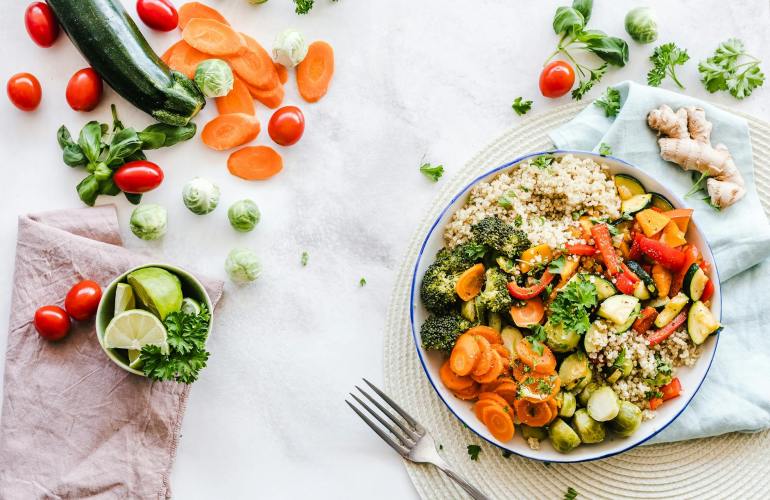
Vegetables on plate

From Comfort Food to Conscious Living: My Journey into The Vegan Transformation

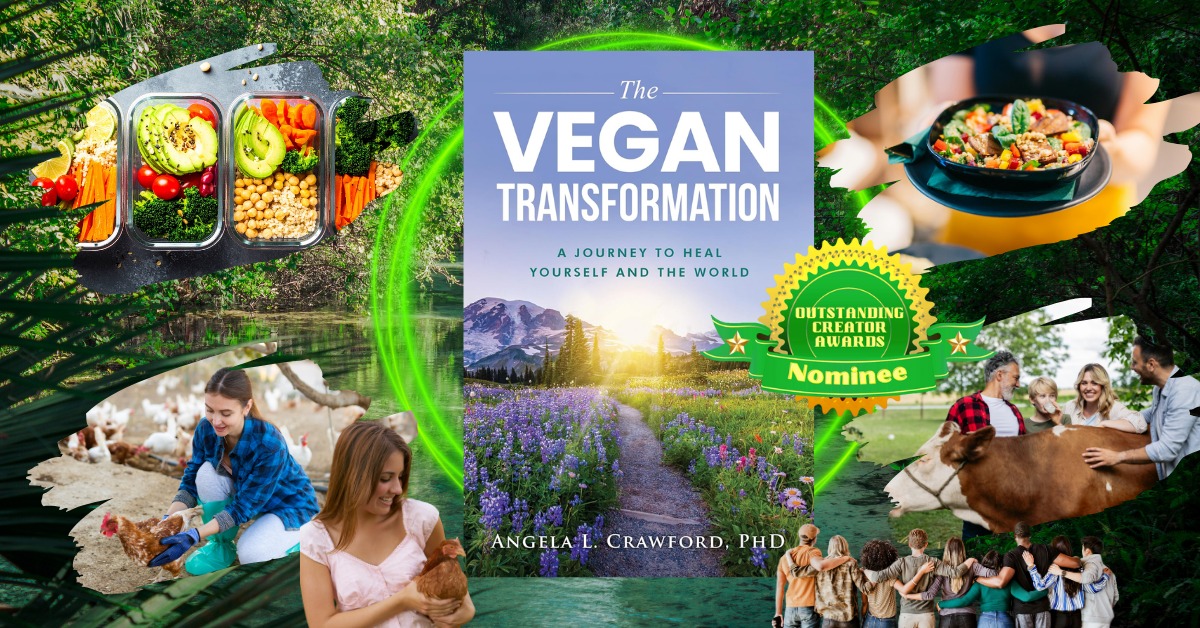
Graphic by Outstanding Creator Awards

Going vegan was a transformation I didn’t see coming.

I grew up in small-town Iowa, in the heart of farm country. I was aware of the farms around me – but had very little awareness of how my food was produced, or the realities of animal agriculture. Plus, I had personal issues that blocked me from looking more deeply…Issues like food addictions and comfort eating. I ate what was convenient, comforting, and tasty. And like many of us, I was confused by the conflicting messages about what was truly healthy.

So even though I was a psychotherapist, empowering clients to make healthy lifestyle changes, I knew little about the power of nutrition – and I myself wasn’t eating in a very healthy way. While I knew it would benefit me to eat more fruits and vegetables, most often I chose frozen microwave dinners, salty snacks, and chocolate bars. In addition, my Midwestern upbringing taught me that meat and dairy were absolute necessities. I had meat for most of my meals, and thought something was missing if it wasn’t there. I thought I needed it for energy, to have enough protein, and to balance out my sugar highs.

Then in late 2006, I had what I think of as my awakening. I saw a program on PBS about working conditions for employees in a meat processing plant, which got me thinking about how my food got to me. Even though the program did not show any gory details about “meat processing,” I felt empathy for the workers and the terrible conditions and injuries they endured. And very soon, this led me to think, “Well, if you don’t like how the workers are treated, what do you think happens to the animals?”  

The very next day, I bought my first plant-based cookbook and cooked my first vegetarian recipe – a spinach, red pepper, and artichoke lasagna. It was delicious – and even though I hadn’t enjoyed cooking before, suddenly it became a fulfilling adventure. I discovered an array of beautiful, colorful, and flavorful plant-sourced ingredients – fruits, vegetables, legumes, whole grains, nuts, seeds, spices and herbs, and all kinds of flavorings and condiments.

I began reading everything I could about the ethical, health, nutritional, and environmental impacts of our food choices. These discoveries led me to go vegetarian within a couple of months of watching this PBS program. Once I understood (and emotionally connected with) the animal suffering and cruelty inherent in factory farming and industrialized slaughter, I just couldn’t eat meat anymore.

Over time, after further reading and watching videos, I came to see all the ways humans harm and exploit animals (e.g., the egg and dairy industries; leather, wool, and down; research and testing; entertainment). Something shifted in me. I broke through my disconnection and dissociation about the animal harm and exploitation in so many industries – and took a stand to do my best not to contribute to this. I made the decision to go vegan in early 2019, and when I did, so much opened up inside of me.

I felt a sense of freedom and lightness that surprised me. I found greater authenticity, a sense of meaning and purpose, and connections with like-hearted others across the globe. I went from being a very private introvert, to being much more willing to be out there in the world, starting a blog and doing public speaking about thriving with a vegan lifestyle.

Even though it was emotionally painful to connect with the suffering of animals – and the reality that many people seem unwilling to make changes that would lessen this suffering – I also felt freer and more empowered when I acknowledged what I must have known deep down. I hadn’t previously realized the weight I felt when eating animal products, but once I shifted to a plant-powered diet, I felt noticeably lighter and more peaceful.

I also felt more empowerment over my personal health and well-being, as I learned about the benefits of a plant-based diet for preventing and reversing many common chronic diseases of our time. Learning about the research of Drs. Dean Ornish and Caldwell Esselstyn showing that a whole food, vegan diet can help to prevent and reverse heart disease was super-empowering, especially given my strong family history of cardiovascular issues.

And somewhat to my surprise, I found it much easier to make healthier food choices. As I ate high-nutrient plant foods on a regular basis (fruits, veggies, legumes, nuts, and whole grains), many of my cravings for addictive and less healthy foods seemed to fade. (I still love chocolate, but find myself satisfied with small qualities of high-quality dark chocolate rather than the large bags of milk chocolate candies that I ate years ago.)

I also discovered that there is a strong connection between what we eat and our emotional well-being. I dove into the research and learned that an anti-inflammatory, high-fiber plant food diet helps to boost our brain, nervous system, and gut health. (You can learn more about this in my recent podcast interview on Food and Mood).

It has been deeply fulfilling to realize how so many things I care about are interconnected. Choosing to honor my compassion by no longer eating animal products also turned out to be an act of compassion for my own well-being, for other humans, and for our planet.

My own transformation – and that of other vegans I met through networking groups – led me to research and write my recently released book, The Vegan Transformation: A Journey to Heal Yourself and the World. I had read a lot about the health benefits of a plant-based diet, and about the ethical reasons for going vegan. But I hadn’t seen much about the emotional and spiritual benefits of this lifestyle. What changes do we experience internally, psychologically, and spiritually when we honor our values and our compassion, and take this road less traveled?

I created an online survey in 2021, which was completed by about 350 vegans. I followed up with 75 in-depth interviews. From these surveys and interviews, I identified seven core transformative pillars: Values alignment; expanding compassion; meaning and purpose; authentic fulfillment; meaningful connections with others; health empowerment; and spiritual deepening. The book shares these pillars, along with stories from my interviewees that illustrate them. I also explain why these transformative themes matter – from the lens of positive psychology, health psychology, and lifestyle medicine.

Learning the stories of other vegans through these interviews and surveys was incredibly uplifting for me – because even though it can certainly be challenging to be vegan in a non-vegan world, it is also deeply fulfilling and healing for many of us. I was struck by how, for many vegans, sharing this lifestyle became central to their purpose and mission.

The year I became vegan, 2019, was dubbed “The Year of the Vegan.” It was an era of heightened interest in vegan and plant-based lifestyles. Right now (in late 2025), the forces of society do not feel so supportive for veganism, even compared to a couple of years ago when I was deep into writing the book. But I continue to hold on to the vision of a compassionate, healthy, vegan world – a world where we end exploitation and unnecessary harm to animals, where we recognize that all sentient beings matter, where we care for one another, ourselves, and our planet.

I invite you to imagine – what would this healthy, compassionate world look like and feel like for you? Take a moment to imagine a world where we are kind to one another and to all beings, where we are healthy in mind-body-spirit, and where we find creative and harmonious solutions to care for the world we live in. Consider how holding that vision daily might uplift you and energize you – even when you face discouraging times and it seems the world will never change. (Here is a link to my guided meditation of “Visioning a Compassionate Vegan World.”)

I truly believe that we are called to expand our circle of compassion – and to bring our unique selves and gifts to serve. We each have something to contribute. And often that starts with our everyday choices – the ones we may have once taken for granted. We come to see that with each meal, and with each conscious and intentional choice, we become – and inspire – the compassionate change we want to see in the world.

NOTE: This article is an adaptation of my presentation for The Vegan Transformation launch celebration. You can watch the presentation on YouTube here.

To learn more about the transformative themes, stories, and research shared in this article, check out my book, The Vegan Transformation, available in paperback, e-book, and audiobook at major booksellers.

The graphic at the top of the page was created by Outstanding Creator Awards, who reviewed The Vegan Transformation and awarded it first place in several categories.
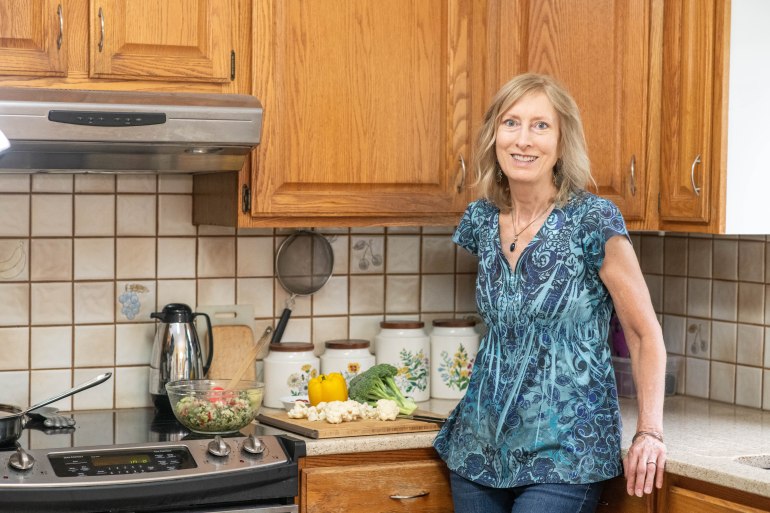
Author standing in kitchen with vegetables on counter

Angela Crawford, Ph.D. is a psychologist, vegan educator, and PCRM Food for Life instructor. She is author of The Vegan Transformation: A Journey to Heal Yourself and the World (Lantern, 2025). The Vegan Transformation is a winner of the Outstanding Creator Awards and Vegan Choice Award, and is available at major booksellers.

Plant-Powered Journaling: Unleash Your Healthiest, Most Authentic Self

Colorful bowls of vegetables and dips
Photo by BULBFISH on Pexels.com

One of the most transformative experiences of my life was becoming vegan. I started on this path after seeing a program about injured workers in a meat processing plant. This raised my awareness of the devastating impacts of factory farming – on animals, humans, and the planet – and led me to read every book I could about veg living. Over time, I discovered the health, ethical, and environmental benefits of leaving animals off my plate and choosing plants instead. I expanded my food palette with delectable plant-based meals. On my vegan journey, I found a sense of peace in aligning with my deepest values, along with improved health, fulfillment, purpose, and mind-body-spirit well-being.

At the same time, this journey was not without its challenges. Early on my vegan path, I struggled emotionally with all that I was learning about the violence and suffering inherent in industrialized animal agriculture. I was in shock about what I discovered – and disillusioned that others around me couldn’t see what was now so obvious to me. I also felt out of place in social situations where animal foods dominated the menu. At moments, I found myself tempted to slip back into what was familiar and socially accepted, just because it seemed easier – even though I was totally committed to veganism.

Turning to my journal was a healing salve and guiding light that saw me through these initial struggles. I wrote about my feelings, challenges, discoveries, and insights, and explored new ways to handle social situations, while honoring my vegan values. Writing in my journal not only kept me sane, it also reminded me of my WHY for change when my commitment faltered. It showed me which approaches and patterns were working or not working for me, and it guided me to new, creative solutions.

I’ve found journaling to be incredibly helpful throughout my life – through all kinds of changes, transitions, losses, and accomplishments. It is such a powerful way to connect with yourself, live more authentically, gain clarity, accomplish goals, heal from emotional trauma, and overcome challenges. Not only have I found journaling personally beneficial, I’ve frequently recommended it to students and clients. I also incorporated journaling prompts in my forthcoming book about the transformative power of a vegan lifestyle.

Because journaling is so accessible, and yet so transforming and healing, I wanted to share some writing tools to support YOU on your plant-powered journey. These can be helpful wherever you are on this path – whether in the process of transitioning to a plant-strong lifestyle or already vegan and wanting tools to thrive in mind, body, and spirit. I’ll also share a link to my FREE Plant-Powered Journaling Guide that you can download.

What is journaling?

Journaling is a process of writing out our feelings, thoughts, experiences, concerns, questions, and insights. Regular journaling has been shown by research to improve emotional and physical health. There are many different approaches to journaling, which I will discuss further below. But first, let’s review some of the benefits demonstrated through research studies.

Benefits of journaling:

  • Decreased anxiety, depression, and stress
  • Improved emotional well-being
  • Decreased ruminative thoughts
  • Decreased PTSD symptoms
  • Improved physical health
  • Decreased doctor visits
  • Decreased blood pressure
  • Improved immune functioning
  • Decreased work absenteeism
  • Improved coping with stress

How does journaling help?

While the research is not 100% clear on this, some possible mechanisms include:

  • Release of emotions
  • Facilitates mental and emotional processing, helping to make sense of significant events
  • Reorganizes inner narratives to create more adaptive beliefs
  • Gives space from negative thoughts
  • Helps gain clarity about next steps to take
  • Self-awareness and self-discovery

What are some of the different types of journaling?

Tracking Progress. If you are seeking to change eating patterns, nutritional intake, physical activity, or health, it can be invaluable to track relevant behaviors and outcomes for a period of time – for 1 week, 4 weeks, 8 weeks, or longer. This gives incredible insight into your current eating and lifestyle patterns, and how changes in diet, exercise, or other lifestyle practices impact your physical and emotional well-being. You may discover that certain foods or activities negatively impact your symptoms, or you may uncover sabotaging patterns you had not previously recognized. You’ll also see which lifestyle changes create positive change. Health and fitness apps such as Fitbit, Apple Health, and Google Fit can be helpful tracking resources, or you can simply keep a written log.

Expressive Writing – There has been considerable research showing that expressive writing can improve physical and emotional health. This type of journaling typically involves writing for 15 to 20 minutes about an emotionally significant, stressful, or traumatic experience for a few days in a row. While writing, express your feelings and thoughts; how this experience affects your relationships and other aspects of your life; insights and learning; and what you would like to see happen. Notice how you feel afterward. You may feel temporary distress as you express your feelings. However, most people report relief and clarity after writing, particularly over time. To learn more about expressive writing, check out the book Opening Up by Writing it Down by James W. Pennebaker, Ph.D. and Joshua M. Smyth, Ph.D.

Morning Pages – This is an approach developed by Julia Cameron, author of The Artist’s Way: A Spiritual Path to Higher Creativity. Cameron recommends writing three pages each morning, preferably stream-of-consciousness, hand-written, and not to be edited or critiqued. Being consistent with Morning Pages opens up creativity, increases connection with the Self, and improves emotional well-being. Several of my friends and colleagues swear by this process for gaining greater insight, creativity, and self-awareness.

Deep Soul Writing – Created by Janet Conner, author of Writing Down Your Soul: How to Activate and Listen to the Extraordinary Voice Within. Deep Soul Writing was recommended to me by a coach when I was going through a major life transition, and has become my go-to journaling approach ever since. In this approach, you write journal entries to your Higher Power or your Higher Self – expressing your thoughts and feelings, asking questions about issues that trouble you, seeking guidance, and writing down the insights and responses you receive. An important aspect is intentionality – setting the intention to connect with the Divine, your Soul, or Higher Wisdom through your writing. This form of journaling can be a guiding light through turbulent times.

Guided Journaling – This involves responding to prompts asking about your feelings, thoughts, perspectives, concerns, and desires. You can find guided journals on a variety of topics. Below, I share my FREE journaling guide with reflection prompts to support your plant-powered journey.

How does journaling help with thriving on the plant-based journey?

Journaling can be a life-changing tool that helps to identify and release feelings, reach greater self-awareness, get through tough times, and gain new insights. Here are some of the ways it can help on the path to a plant-powered lifestyle:

  • Track and celebrate progress toward your goals
  • Recognize obstacles, and explore how to get back on track if you have a setback
  • Express and process the range of feelings that come up along your vegan journey
  • Write about emotional and social challenges, how you handled them, and what you might do differently in the future
  • Write about your discoveries and all the positives that come with your new lifestyle
  • Document your change journey – this helps to connect with your resilience and commitment
  • Seek guidance from your Inner Wisdom for challenges or questions you are wrestling with
  • Get more in touch with your truest, most authentic Self

Are you ready to try the power of journaling to support your veg journey? If so, I invite you to check out my FREE Plant-Powered Journaling Guide. It offers information about the benefits of journaling, types of journaling you can try, and reflective writing prompts to get you started.

May your plant-powered journey bring you authentic fulfillment. And may you be fueled by the power of journaling to unleash your healthiest and most authentic Self.

Angela Crawford, Ph.D. is a psychologist, author, and vegan educator. She is passionate about the benefits of plant-powered living for physical and emotional well-being, compassion for all sentient beings, and caring for the planet. She recently researched and wrote a book on the transformative impact of a vegan lifestyle for mind, body, and spirit due to be published in 2025.