

Becoming vegan was part of my journey to greater emotional fulfillment. Once I became fully aware of the injustices and cruelty to animals in animal agriculture, I could no longer participate in eating animal-based foods. As I realized how much was at stake through what we eat, I became committed to living my vegan values—of compassion, health, and sustainability.
In the process, I found my voice and became more authentic, truer to myself and my values, standing up for what I believed in, even when sometimes it wasn’t easy to do so.
I learned to value my own needs and convictions above “keeping the peace” or “fitting in.” I discovered that my perspectives mattered – both for my own well-being and for the greater good. I also learned I could voice my views in ways that often led to positive conversations and curiosity versus confrontation or conflict.
Now having been vegan for several years, I feel empowered, knowing that through my daily food choices, I can take a step toward compassion and justice. I don’t have the power to stop the injustices in the world – but each day I can choose not to contribute to or condone the suffering of sentient beings.
It’s been freeing to give up animal products and to stand in support of animals’ rights to live as sentient beings who have feelings, sensitivity to pain, a desire to live, families, personalities, and needs and desires – just as we do.
True fulfillment is not about having more things or getting what we want. It’s about living aligned with values, having a sense of meaning, recognizing our connection to the larger whole, and contributing to the well-being of other humans, animals, and the planet we share. There is peace and empowerment in discovering where and how we can contribute to the greater good.
Authentic fulfillment is also not about being happy all the time. When we acknowledge and witness the suffering in the world, including that of the billions of animals killed each year for food, it is very normal to have feelings of sadness, anger, and even despair. Our human journey inevitably entails struggles with difficult emotions – even when we are just navigating daily life. But all emotions have value and are meant to guide us toward deeper truth and well-being – including those emotions we label as negative or painful. A rich, fulfilling life entails experiencing the whole range of our complex and varied human emotions.
Perhaps it’s important to remember that positive emotions such as happiness are only part of the equation for well-being and flourishing. Other factors may be even more important, such as a sense of meaning and purpose, alignment with deeply held values, positive relationships, vitality, appreciation, gratitude, growth, and mastery. These variables are all part of what creates a life worth living.
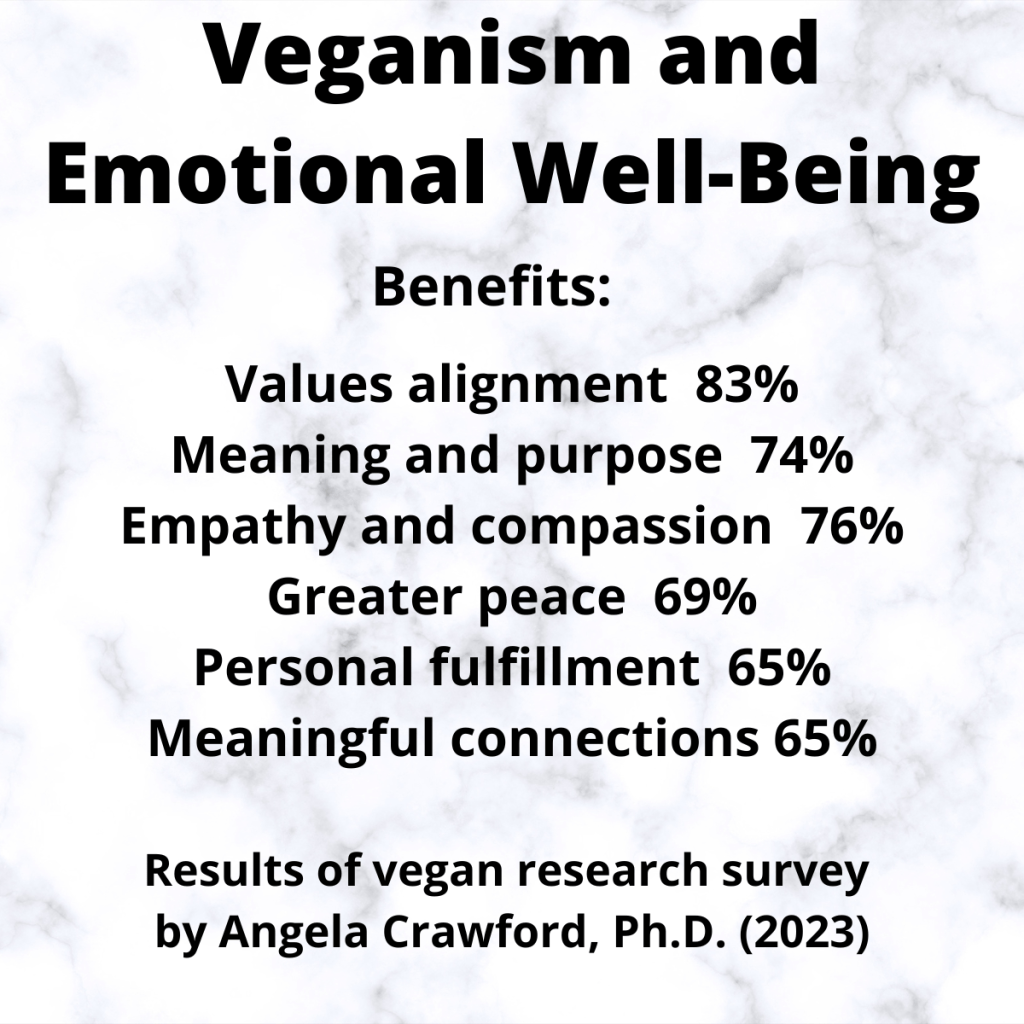
The decision to be vegetarian or vegan is more than just a dietary choice. Whatever your motives for choosing a plant-powered lifestyle – whether health, fitness, animals, world hunger, and/or the environment – it is an act of great commitment to choose the path less travelled.
In my book research on the transformative impact of a vegan lifestyle, my research participants reported that being vegan has led to greater peace, fulfillment, and sense of meaning and purpose.
Below are seven ways that veganism can contribute to fulfillment and well-being:
- Eating a nutrient-rich, plant-exclusive diet nourishes your body, increases vitality, and reduces your risk of many chronic medical conditions. A plant-powered diet is also anti-inflammatory, which supports your cognitive, mental, and emotional flourishing.
- There is fulfillment in honoring your deepest values, which for most of us includes compassion for animals. Once we make the choice to no longer turn a blind eye to the plight of farmed animals – and no longer contribute to their suffering through what we eat – we experience peace and freedom.
- Being plant-based is the most powerful way to live sustainably and reduce your environmental footprint. Animal agriculture has a devastating impact on greenhouse gases, water and land usage, pollution, and deforestation. By changing to a plant-based diet (no meat or dairy), you can save 1500 gallons of water, 30 square feet of forest, and 45 pounds of grain each day. (For more info, check out Eat for the Planet by Nil Zacharias and Gene Stone.)
- Vegan food tastes great! There is a common misperception that vegan food is bland, restrictive, or depriving. On the contrary, most vegans find that their food palette expands greatly after becoming vegan. We enjoy foods from the bounty of the plant kingdom – including fruits, vegetables, legumes, whole grains, nuts and seeds, spices, herbs, and condiments. There are countless delicious recipes available – with plant-based versions of your favorite foods from all types of cuisines. And when you don’t feel like cooking, there are awesome veg-friendly restaurants as well as many commercial plant-based items in the grocery store (burgers, pizza, ice cream, and so much more) – cruelty-free and delicious.
- Being vegan can lead to a greater sense of meaning and purpose. It’s empowering to realize that every day you can make choices that contribute to a healthier and kinder world, simply through what you choose to purchase and to eat. Many of us become so inspired that we choose careers, volunteer work, or activism to contribute to the well-being of humans, animals, and the planet.
- In becoming vegan, you can discover deep and meaningful connections with others throughout the world who share your commitment to non-violence, compassion, and flourishing for all.
- When we no longer eat animals, this can awaken us spiritually. Many vegans describe greater connection to their intuition, to nature, to all sentient beings, and to the planet. No longer are we consuming fear, suffering, and death. Now we are free to recognize how we are all connected – and to discover our intricate place in the greater whole. We experience deeper appreciation and gratitude for the awe, wonder, mystery, and beauty of the natural world.
Wherever you are on your journey, I hope you’ll experience the joy and peace of aligning with your deepest values. May you live healthfully, compassionately, and sustainably. And may you discover freedom, healing, and authentic fulfillment on this transformative path.
Check out my resource list for books, websites, cookbooks, and documentaries to support your plant-powered journey.
And for more information on the benefits of a vegan lifestyle for health, animals, and the planet, CLICK HERE.

Angela Crawford, Ph.D. is a psychologist and transformational coach. She is passionate about empowering people to express their authentic voice and purpose in service to their own well-being, all beings, and the planet. Dr. Crawford is certified as a Master Vegan Lifestyle Coach and Educator through Main Street Vegan Academy and has a Plant-Based Nutrition certificate from the T. Colin Campbell Institute for Nutrition Studies at e-Cornell. She is currently doing research for a book on the psychological and emotional impacts of a vegan lifestyle. She serves as a psychology advisor for weDIDit.Health, an on-line community that shares the benefits of a plant-powered lifestyle. She hosts a YouTube channel, The Vegan Transformation.



 Angela Crawford, Ph.D